Dust Collection Housings
When airborne dust, fumes, and hazardous particulates are part of your daily operations, the stakes for getting your filtration right are high. The wrong housing means compromised air quality, failed inspections, and risks to the people in your facility. The right dust collection housing gives you control, compliance, and confidence.
At Air Purifiers, Inc., we build housings designed to handle what your environment actually throws at them — because your team and your operation deserve nothing less.
Too many facilities are running filtration systems that weren’t designed with their specific contaminants, airflow demands, or compliance requirements in mind. The result? Filters that load too fast, housings that are difficult to maintain safely, and systems that fall short when regulators come calling.
You need dust collection housings that are engineered for your application—not just bolted together and hoping for the best.
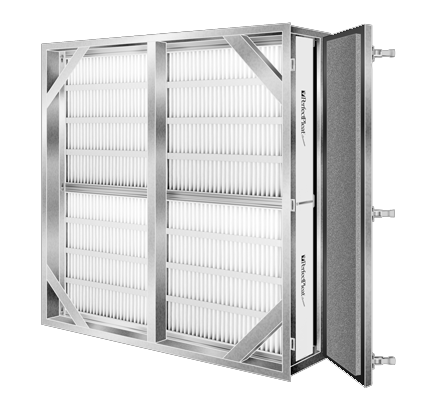
Whether you’re running a single-stage setup or a complex multi-stage filtration system, our side-access ASHRAE housings are built to adapt to you. Available filter configurations include:
You can customize your housing with dual access doors, pressure gauges, and insulated enclosures — so your system fits your space, your process, and your compliance needs, not the other way around.
If your facility deals with chemical fumes or persistent odors alongside particulate matter, you need more than a basic dust collector. Our SAAF™-sealed fume and odor control housings combine high-efficiency particulate filtration with odor absorption modules in a single, heavy-duty enclosure.
You get cleaner air and a more manageable maintenance cycle — without juggling multiple systems.
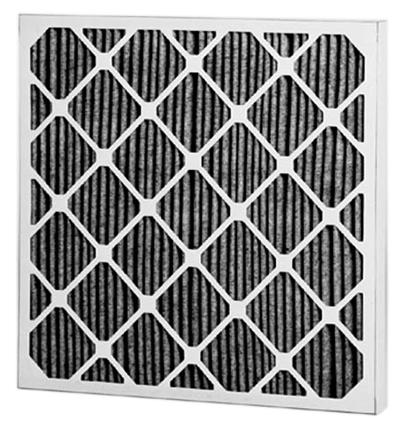
Options include:
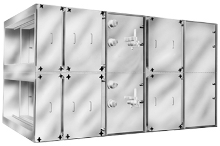
When the contaminants you’re capturing are genuinely hazardous — radioactive particulates, pharmaceutical compounds, biological agents — filter changeouts become a serious safety event. Our Bag In/Bag Out dust collection housings are engineered specifically for these situations.
The side-loading design keeps filters fully contained during removal, protecting your maintenance team from direct exposure at every step. These systems are trusted in:
Your workers shouldn’t have to choose between doing their job and staying safe. With a properly designed BIBO system, they don’t have to.
Shop for Parts
Have the parts you need shipped directly to you. Forget the hassle and shop with us!

A dust collection housing isn’t just a metal box around your filters. It’s what determines how long your filters last, how safely they can be changed, how well your system performs under real operating conditions, and whether you stay on the right side of code compliance for combustible and flammable dust and fume control.
When your housing is engineered right, everything downstream gets easier — maintenance, compliance, air quality, and operational uptime.

A dust collector is the complete system; the housing is the structural enclosure that holds and protects your filtration media. The housing determines filter accessibility, containment, and system configuration — it’s the foundation everything else depends on.
It depends on your contaminant type, airflow volume, filter media, and compliance requirements. ASHRAE housings are versatile for general industrial use, while BIBO systems are necessary when hazardous particulates require contained filter changes. We can help you match the right housing to your specific conditions.
NFPA standards (including NFPA 652 and application-specific standards) require that dust collection systems handling combustible or flammable materials meet specific design and construction requirements. Your housing needs to be part of that compliant system — not an afterthought.
Yes. High-efficiency HEPA and BIBO housings are designed for environments where contamination control is critical, including ISO-classified cleanrooms in pharmaceutical, biomedical, and electronics manufacturing.
Inspection frequency depends on your dust load, filter type, and application, but a routine inspection schedule — including checking pressure differentials, seals, and access door integrity — is essential to keeping your system performing and your team protected.