Extractor Arms

In any industrial environment where welding, grinding, soldering, or processing is happening, something invisible is always in the air. Dust. Fumes. Particles that don’t show up until they’re already in someone’s lungs—or until an inspector shows up with a clipboard.
The most effective place to stop airborne contaminants isn’t at the ceiling or across the room. It’s right where they’re created. That’s exactly what extractor arms are designed to do—and when they’re sized and positioned correctly, they’re one of the most efficient source capture tools available.
General ventilation moves air. It doesn’t necessarily capture contaminants before your workers breathe them. By the time fumes from a welding station or fine dust from a grinding operation travel toward a ceiling vent or exhaust, your team has already been exposed.
You need a solution that meets the problem at the source—flexible enough to position exactly where you need it, powerful enough to capture what you’re generating, and durable enough to hold up in a real industrial environment.
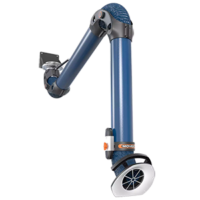
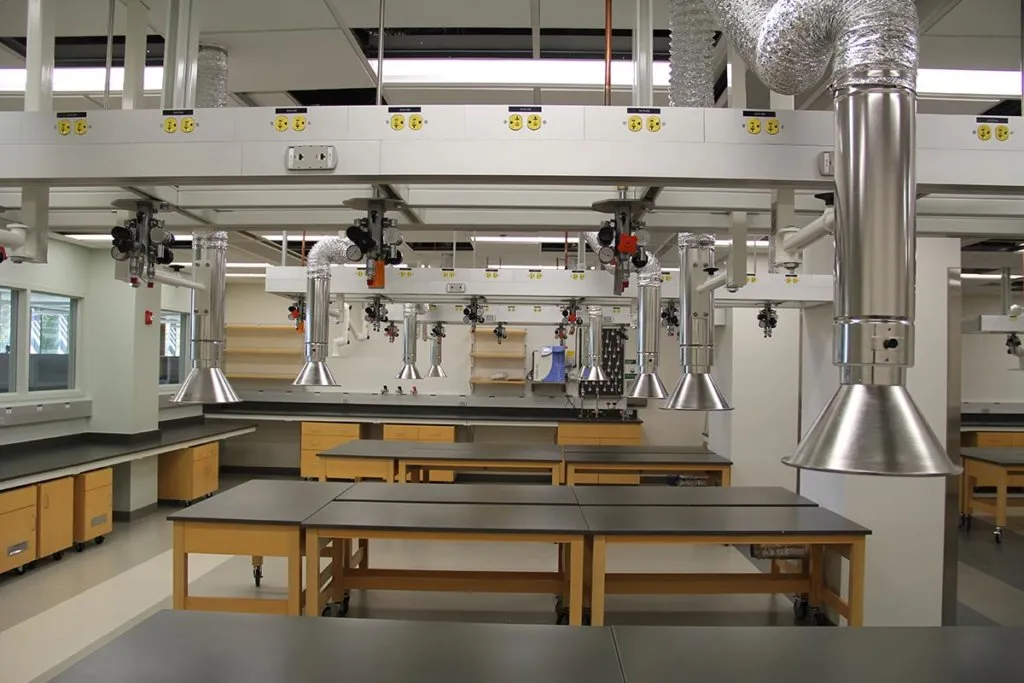
Flexible and powerful, these arms capture welding fumes, grinding dust, and airborne particulates right at the point of generation — keeping contaminants away from your workers before they have a chance to spread.
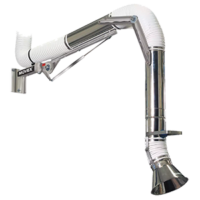
Built to perform in corrosive, high-moisture, or contamination-sensitive environments, stainless steel extractor arms deliver reliable source capture where standard materials simply won’t hold up.
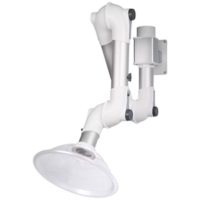
Designed for precision workspaces, these compact arms provide effective capture of chemical fumes and fine particulates without interfering with the detail-oriented work happening at the bench.
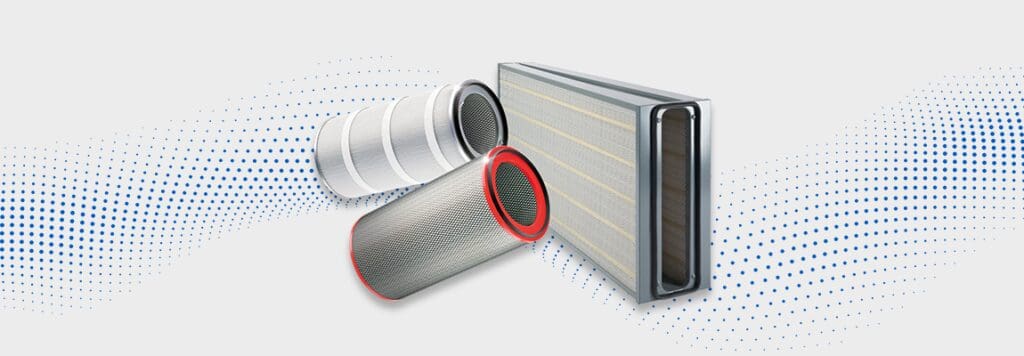
Did you know that you can have the extractor arm parts you need shipped directly to you? Leave the hassle behind. Shop with us!
One of the most common mistakes in source capture is mismatching the arm to the application. An undersized arm on a high-fume welding process won’t protect your workers. An oversized system for a small-bench operation wastes energy and budget.
Our extractor arm selection spans light-duty applications all the way to high-flow and high-temperature needs—so you get the right capture velocity for your specific contaminant and process, not just whatever happens to be in stock.
We also carry arms rated for corrosive or potentially explosive environments, because some applications don’t give you the luxury of using standard equipment.
No matter your industry, our extractor arm experts are ready to help you choose the right system. Give us a call today.

We supply, repair, and maintain extractors arms from industry-leading manufacturers, including Nederman, Monoxivent, Airflow Systems, and Microair. You’re not getting off-brand equipment when it matters most. These are names that industrial facilities rely on for consistent, long-term performance.

Generally, the closer the hood of the arm is to the point of generation, the better the capture efficiency. Most extractor arms perform best within a few inches to about one foot of the source—though high-flow arms can capture effectively at greater distances depending on the contaminant and airflow velocity.
Both configurations exist. Some extractor arms connect to centralized dust collection or filtration systems, while others are paired with self-contained filtration units. The right setup depends on your space, the number of workstations, and the volume and type of contaminants being captured.
A swivel arm typically pivots on a fixed wall or column mount and works well for individual workstations. A boom arm offers a longer reach and greater range of motion, making it better suited for larger work cells or applications where the operator moves around more.
Extractor arms are widely used as a compliant approach to welding fume control, including for compliance with OSHA’s hexavalent chromium and manganese standards. The specific requirements depend on the materials being welded and the system’s capture efficiency—a proper assessment is always recommended.
High-temperature extractor arms are specifically rated for applications that generate heat along with fumes or particulates—such as certain metal processing or furnace operations. Look for arms with rated temperature tolerances that exceed your process conditions, and consult with a specialist if you’re unsure.