
Dust Collection Systems > Wet Dust Collectors
A standard dry collector can’t safely or effectively handle some dust types. When your process generates moist or sticky dust, or when the material itself is potentially explosive, a wet dust collection system is the correct solution. Wet collectors capture and contain dust using water or other liquids rather than filter media, eliminating the ignition risk that a dry system can pose when handling combustible materials. At Air Purifiers, Inc., we supply industrial wet dust collectors designed specifically for the most demanding and highest-risk dust collection applications.
Dry dust collectors, whether baghouse, cartridge, or shaker-style, rely on fabric or cartridge filter media to capture dust. For many applications, that’s the right approach. But certain dust types make a dry system inappropriate or unsafe.
A wet dust collection system is the right choice when:
In these situations, a wet collector doesn’t just work better; it works safely where a dry system cannot.
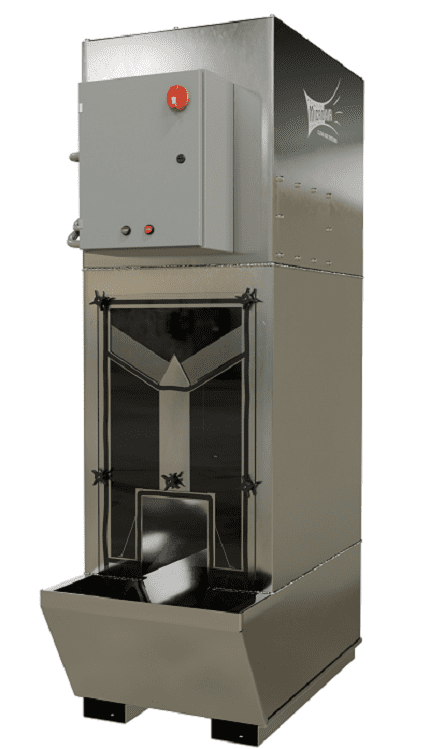
The RotoClone Type W is an industrial wet dust collector designed for applications where moisture, stickiness, or high-humidity exhaust is the primary challenge. It handles dust and particulate that would quickly foul a dry filter system, making it the practical choice for food and chemical process environments.
Typical applications for the Type W include:
When the material being collected is potentially explosive, the stakes are too high to use a dry system. The RotoClone Type LVN is a rugged, industrial wet dust collector built specifically for combustible dust collection in high-risk environments. By capturing dust in a liquid medium, the Type LVN eliminates the dry dust accumulation and ignition risk that makes standard collectors dangerous when handling light metals and reactive materials.
Typical applications for the Type LVN include:
If your process generates dust that OSHA or NFPA would classify as combustible or explosive, the Type LVN is built for exactly that application.
Keeping your wet dust collection system running requires access to the right components and wear parts. We carry replacement parts compatible with RotoClone systems and a range of other industrial wet collectors.
Browse our online shop or contact us directly, and we’ll help you identify what you need.
Using the wrong dust collection system for combustible materials isn’t just an equipment mismatch. It’s a compliance failure and a safety hazard.
OSHA and the NFPA have clear standards for facilities handling explosive dust, and aluminum, magnesium, and titanium are among the most documented combustible dust hazards in industrial environments.
Wet collection addresses this risk directly by eliminating dry dust accumulation that can make ignition possible.
Every facility handling reactive or explosive dust should have its system formally evaluated against current standards, whether it is new or has been in operation for years. To review NFPA standards, visit www.nfpa.org.
Wet dust collection is a specialized field. The facilities that need it are typically working with materials that leave very little margin for error, and the cost of getting the system wrong is measured in worker safety and regulatory exposure, not just equipment performance.
If you’re in light metals machining, chemical processing, food production, or mining, we’ll help to ensure the wet dust collection system you select is the right one for your needs. You’ll never have to worry about system design, installation, or ongoing service.

A wet dust collection system captures airborne dust and particulate matter by drawing contaminated air through a liquid medium rather than through dry filter media. The liquid traps and suppresses the dust, which is then drained or disposed of as a slurry. Wet collectors are used when the dust being collected is moist, sticky, or combustible, and a dry filter-based system would be ineffective or unsafe.
The RotoClone Type W is designed for applications involving moist, sticky, or high-humidity process exhaust, such as food processing, drying, and cooking operations. The RotoClone Type LVN is specifically built for combustible and potentially explosive dust, including aluminum, magnesium, and titanium machining dust, as well as rubber grinding, chemical conveying, and mining operations. Both use wet collection to capture dust, but they are engineered for different risk profiles and dust types.
Dry dust collectors accumulate dry particulate inside the filter media and collection hopper. When that particulate is combustible, the right combination of concentration, airflow, and ignition source can trigger a dust explosion or fire. Wet dust collection systems prevent this by keeping the collected material suspended in liquid, eliminating the dry dust concentration that can support ignition. For materials such as aluminum, magnesium, and titanium dust, a wet system is not just preferred; it is the required approach under NFPA standards.
Wet dust collectors are used in food processing, chemical processing, pharmaceutical manufacturing, light metals machining, gunpowder and energetics manufacturing, rubber processing, mining, and other industries where the generated dust is moist, sticky, or classified as combustible or explosive under OSHA or NFPA guidelines.
Combustible dust classification depends on the material’s particle size, concentration, and ignition sensitivity. OSHA and the NFPA maintain guidance on known combustible dust materials, and a formal dust hazard analysis can determine whether your specific material and process create an explosion or fire risk. If you’re working with light metals, many chemical powders, or organic materials, and you’re unsure of your dust’s classification, contact us, and we can help you assess the situation.